The first three weeks of September welcome a fresh new festival for Melbourne: La Mama HOPE PUNK Climate Festival.
Embracing HOPE as a verb and PUNK as a culture, this is a platform that empowers independent artists to contribute to the national climate conversation through art.

In a world of political, social, economic, geographical, and scientific upheaval, HOPE is a radical state. The average person is avoiding plastic straws while watching billion dollar businesses drain water and power to build data centres.
But festival organiser Dora Abraham believes HOPE is an imperative in order to have the conversations required around the subject of climate.
“HOPE is a radical concept these days,” Abraham said. “In HOPE we find action. Without it, apathy drives the collective, and despair shuts down the dialogue. We need to stoke the fires of these important conversations, and artists are well-placed to shape them in fascinating, engaging ways.”

The festival centres on nine feature shows, while inviting conversation and learning through fresh one-off events such as new play readings and SCRATCH.
There's also plenty of FREE events and activations, including a huge opening night party, the La Mama EMERGE final outcome, site-responsive La Mamica, P+ERL panels, and activations in HQ’s forecourt.
The start times are staggered so that festival goers may attend several events in a day, while enjoying La Mama's famous hospitality between shows.
LA MAMA HOPE PUNK CLIMATE FESTIVAL
Tuesday 1 - Sunday 20 September
Tickets $10 - $35 + FREE EVENTS
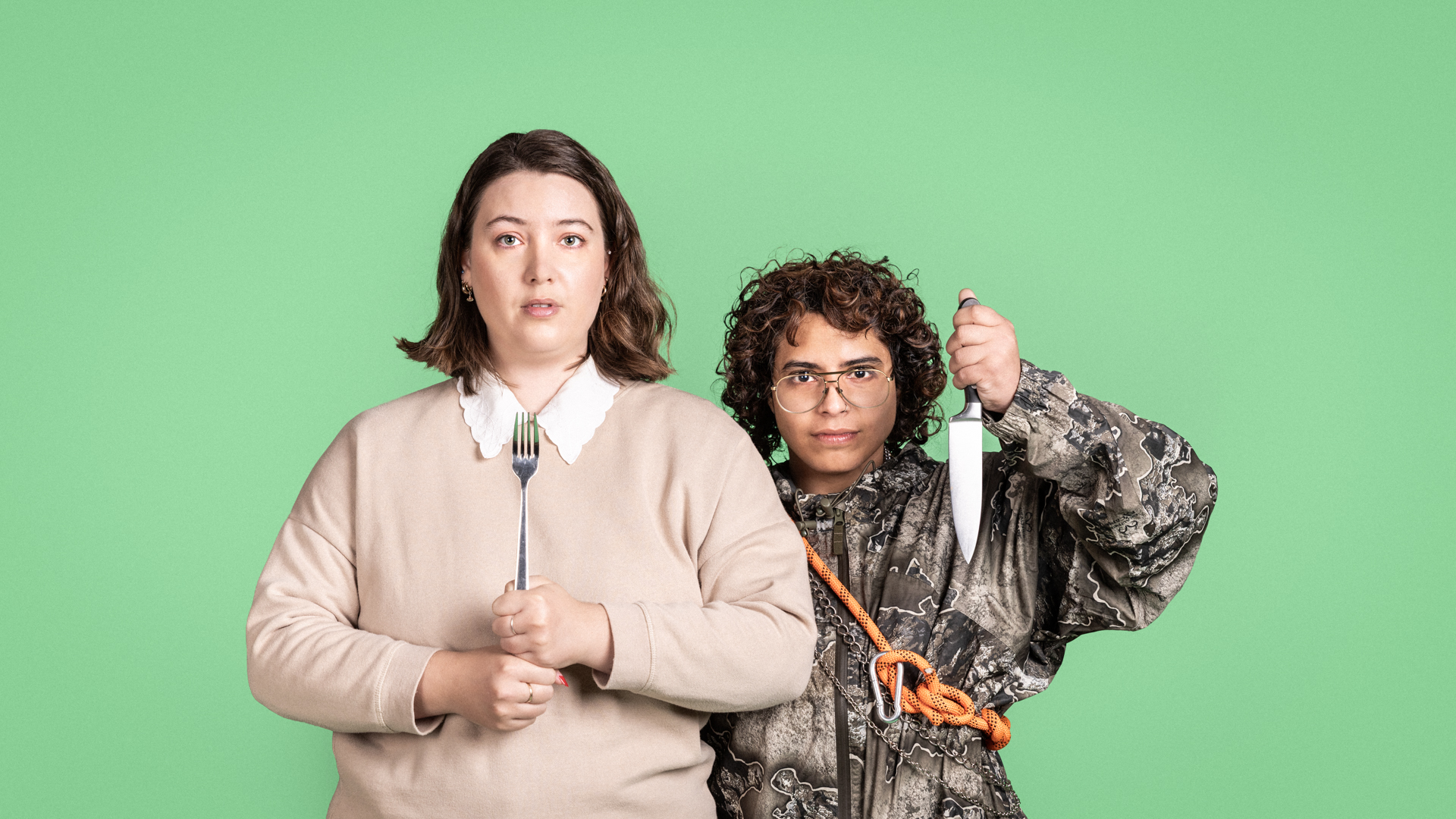
Cover image by Isabel Knight for Susan Bamford Caleo + Elissa Goodrich's PULSE.
Top image by Darren Gill for DOPPELGÄNGSTER's COLD WAR 2.0
Centre image by Darren Gill for Ann Maree + Kyle McCallion's COBBLE CREEK RANGERS
Lower image by Darren Gill for Jamila Main's HOW TO EAT RABBIT
La Mama HOPE PUNK Climate Festival is funded by Greater Melbourne Foundation, Community Bank Clifton Hill-North Fitzroy, and the City of Melbourne, in partnership with The Performance + Ecology Research Lab (P+ERL) at Griffith University.
P+ERL is funded by the Australian Government through the Australian Research Council (ARC) Linkage (project number LP230200526). The views expressed are those of the authors and are not necessarily those of the Australian Government or the ARC.